Air Sealing in Alhambra, CA
Professional Air Sealing in Alhambra, CA — Licensed, Insured & Locally Owned
Professional air sealing in Alhambra, CA. Reduce energy bills 15–30%, improve comfort & air quality. Free estimates. Call (626) 790-7419 today!
Air sealing is the process of identifying and closing gaps, cracks, and openings in a building’s envelope — the boundary between conditioned indoor air and the outside environment. These penetrations allow unconditioned air to infiltrate your home, forcing your HVAC system to work harder, increasing energy bills, and reducing indoor comfort year-round.
In Alhambra, CA, air sealing is especially critical. The San Gabriel Valley’s warm, dry summers regularly push temperatures past 95°F, while winter nights can dip into the low 40s. Homes built during Alhambra’s mid-century residential boom often lack modern building envelope standards, leaving countless pathways for air infiltration. At Alhambra Insulation Masters, our team specializes in comprehensive air sealing services tailored to the construction styles, climate patterns, and energy challenges specific to this community. Whether you own a 1940s craftsman bungalow near Almansor Park or a newer stucco townhome off Valley Boulevard, we have the expertise to seal your home and restore energy efficiency. Call us today at (626) 790-7419.
Understanding Air Sealing
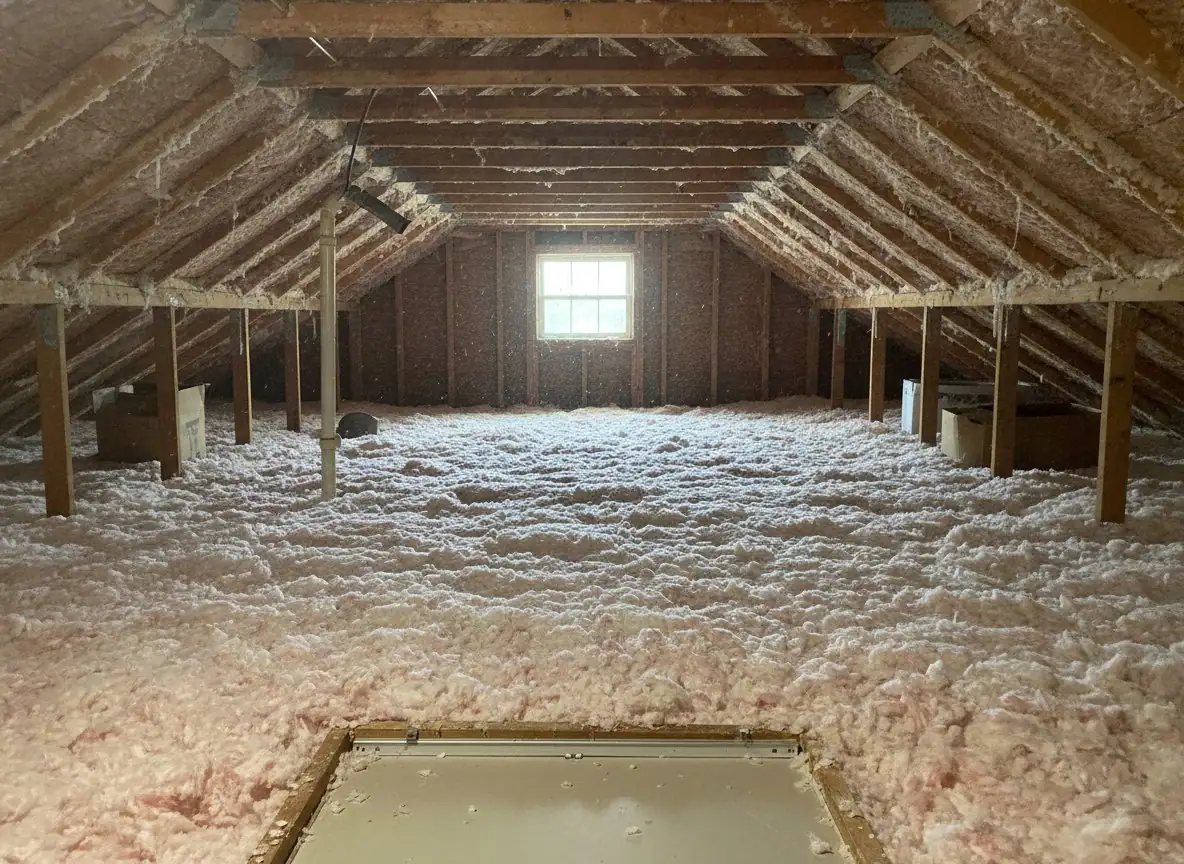
Air sealing is a foundational component of building science — a discipline that examines how heat, moisture, and air interact within a structure. Unlike insulation, which slows the transfer of heat, air sealing physically blocks the movement of air through unintended openings. The two work best together: insulation without air sealing is like wearing a wool sweater with holes; the material is there, but drafts still get through.
Historically, residential construction in Southern California — including Alhambra — did not prioritize airtightness. Before the energy crises of the 1970s, building codes in California and across the country placed little emphasis on controlling air infiltration. Homes were built with framing gaps, unsealed top plates, open chases for plumbing and wiring, and attic hatches that offered virtually no thermal barrier. As a result, a significant portion of Alhambra’s housing stock — particularly homes constructed between 1930 and 1975 — are substantially leakier than modern energy code allows.
Read moreShow less
The Building Performance Institute and the U.S. Department of Energy both recognize air sealing as one of the most cost-effective energy improvements available to homeowners. Studies consistently show that a properly air-sealed and insulated home can reduce heating and cooling costs by 15% to 30%. In a city like Alhambra, where summer cooling loads are substantial and utility rates from Southern California Edison continue to rise, those savings translate directly to hundreds of dollars per year.
Air sealing applies to all types of residential structures found in Alhambra: single-family detached homes, duplexes, apartment buildings, and attached townhomes. Multi-family buildings present unique air sealing challenges because air can travel not only between the interior and exterior, but also between adjacent units — carrying noise, odors, moisture, and allergens along with it. In older Alhambra apartment complexes along Main Street or Garfield Avenue, inter-unit air leakage is a frequently overlooked but highly impactful issue. Learn more about our attic insulation services to understand how sealing and insulation work together for maximum efficiency.
Why Air Sealing Is Needed in Alhambra, CA
Climate Extremes in the San Gabriel Valley
Alhambra sits within the San Gabriel Valley, a basin environment notorious for its heat island effect. During the extreme heat events of recent summers — including the record-setting September 2020 heat wave when Los Angeles County temperatures exceeded 110°F in some areas and Alhambra recorded highs well above 100°F — air-leaky homes were nearly impossible to keep cool. Even with air conditioning running continuously, unconditioned outdoor air infiltrating through ceiling penetrations, recessed light fixtures, and wall outlets can raise indoor temperatures by 5°F to 10°F, overwhelming cooling systems and spiking electricity bills dramatically.
Conversely, winter nights in Alhambra can drop to 38°F to 42°F between December and February. Cold air seeping in through attic hatches, rim joists, and crawl space openings creates uncomfortable drafts and forces heating systems to cycle more frequently. This seasonal temperature swing of 60°F or more places continuous thermal stress on a home’s envelope.
Alhambra’s Aging Housing Stock
A substantial percentage of Alhambra’s residential properties were built between 1920 and 1965. Neighborhoods like Midwick Tract and the streets surrounding Alhambra Park are lined with craftsman bungalows and California ranch homes that predate modern energy codes by decades. These homes commonly feature:
- Unsealed top plates where interior walls meet the attic floor, creating gaps of 1/4 inch to 1 inch along every wall
- Knob-and-tube or early Romex wiring with open penetrations through framing members
- Recessed can lights that function as open chimneys drawing warm or cool air into the attic
- Attic access hatches with no weatherstripping or insulation backing
- Crawl spaces with unsealed vents and foundation gaps connecting to interior floor cavities
Santa Ana Wind Events
Alhambra is subject to periodic Santa Ana wind events, typically occurring between October and March. During these events, sustained winds of 25 to 40 mph — with gusts exceeding 60 mph — push through the San Gabriel Valley and dramatically increase the pressure differential on home envelopes. This pressure difference, known as stack effect, forces air through every available gap at an accelerated rate. Homes that feel reasonably comfortable on calm days can become drafty and difficult to heat or cool during Santa Ana conditions. Professional air sealing significantly reduces a home’s vulnerability to these pressure-driven infiltration events.
Indoor Air Quality Concerns in Urban Alhambra
Alhambra’s proximity to the 10 Freeway and Valley Boulevard — both high-traffic corridors — means outdoor air quality is frequently compromised by diesel particulates, ozone, and other pollutants. An air-leaky home draws in unfiltered outdoor air through random gaps rather than through the HVAC system’s filtration. Sealing the building envelope and introducing controlled ventilation is the medically recommended approach to improving indoor air quality in urban environments like Alhambra.
Free, no-obligation estimates
Talk to Alhambra Insulation Masters
Tell us what you need and we’ll take it from there.
Signs You Need Air Sealing
Comfort and Temperature Issues
- Rooms on the top floor that are noticeably hotter in summer than the rest of the house — often by 5°F or more
- Drafts near electrical outlets, baseboards, or window frames even when windows are closed
- Your HVAC system runs almost continuously during July and August but the home still feels warm
- Cold floors in winter, especially in rooms above an unencapsulated crawl space
Energy Bill Indicators
- Summer electricity bills from Southern California Edison exceeding $250–$350 per month for a standard Alhambra single-family home
- Year-over-year utility cost increases that outpace rate hikes alone
- Significant difference in bills between similar-sized neighboring homes
Moisture and Air Quality Red Flags
- Musty odors entering from crawl spaces or attics — a sign of uncontrolled air pathways
- Condensation forming on interior walls or window frames during winter months
- Excessive dust accumulation on surfaces shortly after cleaning
- Allergy symptoms that worsen indoors, suggesting unfiltered outdoor air infiltration
Urgency Indicators
If you notice ice plant or other vegetation disturbed near your foundation, visible daylight through attic penetrations, or your attic hatch has no weatherstripping, these are high-priority items requiring immediate attention before the next cooling season.
Our process
Our Air Sealing Process
- 01
Initial Home Assessment (1–2 Hours)
Our certified technician visits your Alhambra property and conducts a thorough visual inspection of the attic, crawl space, basement (if applicable), and all major wall penetrations. We document every suspected air leakage point and discuss your comfort and en
- 02
Blower Door Test (30–60 Minutes)
We use a calibrated blower door test to quantify your home’s air leakage rate, measured in Air Changes per Hour (ACH50). Most pre-1970 Alhambra homes test between 8 and 15 ACH50 — far above the California Energy Code target of 5 ACH50 or less. This baseline me
- 03
Prioritization and Scope Development (Same Day)
Using blower door data and thermal imaging when needed, we rank air leakage points by impact and accessibility. Attic top plates, plumbing chases, recessed lights, and attic hatches are typically prioritized as they represent the largest volume of air movement
- 04
Attic and Crawl Space Air Sealing (4–8 Hours)
Technicians access the attic and crawl space to seal penetrations using the appropriate material for each application — low-expansion spray foam for framing gaps, fire-rated caulk around electrical wiring, rigid foam board with foam sealant for large openings,
- 05
Living Space Penetration Sealing (2–4 Hours)
We address outlets, switch plates, plumbing under sinks, fireplace dampers, and other living-space penetrations using foam gaskets and appropriate sealants safe for occupied areas.
- 06
Post-Work Blower Door Test (30–60 Minutes)
A second blower door test confirms the reduction in ACH50 achieved. Our goal is to meet or exceed California’s Title 24 energy code requirements.
- 07
Written Summary and Recommendations (Delivered Within 48 Hours)
You receive a written report documenting pre- and post-sealing measurements, all work completed, and any additional recommendations for insulation upgrades or ventilation improvements.
Air Sealing Methods and Approaches
Spray Foam Air Sealing
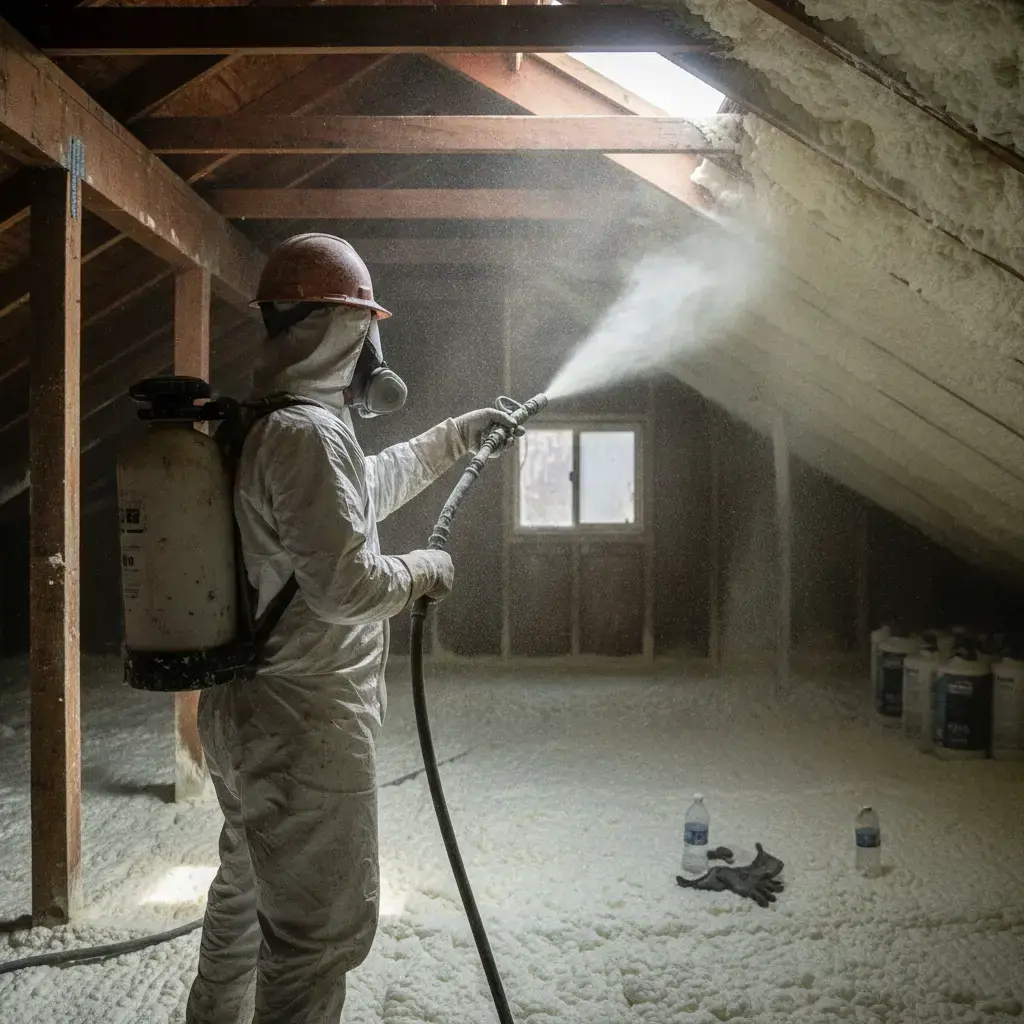
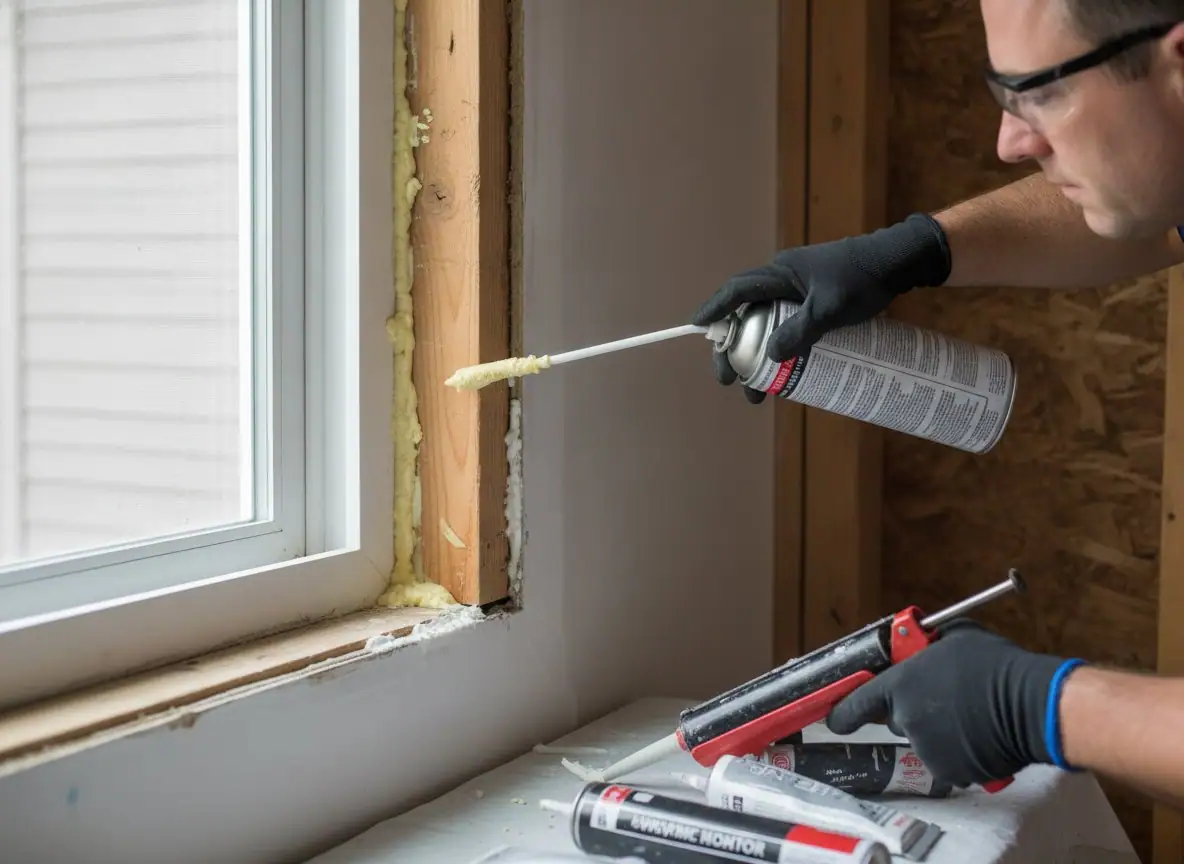
Low-expansion, single-component spray foam is the most versatile air sealing material available. It conforms to irregular gap shapes and bonds to wood, drywall, and masonry — all common materials in Alhambra construction. We use it extensively in attic top plates and around plumbing stacks. For larger cavities, two-component spray foam creates a rigid, airtight and insulating barrier simultaneously. Learn more about our spray foam insulation services.
Caulking and Sealants
Fire-rated caulk and silicone sealants are applied around smaller penetrations — particularly around electrical wiring, HVAC ducts, and pipe penetrations through framing members. In Alhambra’s older wood-framed homes, where settling has created irregular gaps along framing, flexible caulks that maintain their seal through minor building movement are preferred.
Rigid Foam Board with Foam Sealant
For large attic bypasses — such as open top plates above dropped soffits or interior wall cavities — we cut rigid foam board to size, install it, and seal the perimeter with spray foam. This two-material approach is especially effective in Alhambra craftsman homes where architectural features like coffered ceilings create complex bypass pathways.
Weatherstripping and Door Seals
Attic access hatches and pull-down attic stairs are among the most significant single air leakage points in many Alhambra homes. We install compression weatherstripping and rigid foam-backed covers to convert these from open air pathways to properly sealed transitions.
Intumescent Sealants for Fire-Rated Assemblies
In multi-family buildings along Alhambra’s denser residential corridors, penetrations through fire-rated assemblies require intumescent sealants that expand when exposed to heat, maintaining both airtightness and fire resistance.
Air Sealing Cost in Alhambra, CA
Understanding the cost of air sealing helps homeowners plan their investment and evaluate the financial return. Pricing in Alhambra reflects both the regional labor market and the specific characteristics of the local housing stock.
Typical Price Ranges
- Basic air sealing (attic and accessible penetrations, homes under 1,500 sq ft): $350–$650
- Comprehensive air sealing (attic, crawl space, living space, homes 1,500–2,500 sq ft): $650–$1,400
- Whole-home air sealing with blower door testing (2,500+ sq ft or complex construction): $1,400–$2,800
- Multi-family unit air sealing (per unit): $300–$800 depending on unit size and accessibility
Factors Affecting Air Sealing Cost in Alhambra
- Home age: Pre-1960 Alhambra homes typically have more numerous and complex bypass pathways, increasing labor time
- Attic accessibility: Low-slope attics common in ranch-style homes on the south side of Alhambra require more time to navigate
- Crawl space conditions: Wet or contaminated crawl spaces may require remediation before sealing
- Number of recessed light fixtures: Each unsealed recessed light adds approximately $15–$30 to material and labor cost
- Blower door testing: Adds $150–$300 but provides verifiable results and is required for some utility rebate programs
Read moreShow less
Available Incentives
Southern California Edison and SoCalGas both offer rebate programs for qualifying air sealing and insulation projects. California’s Energy Upgrade CA program may also provide incentives. Our team can advise you on current Air Sealing in Alhambra, CA cost considerations and applicable rebates at the time of your estimate. Call (626) 790-7419 for a free on-site quote.
Neighborhoods We Serve in Alhambra
Midwick Tract
This western Alhambra neighborhood features many single-family homes constructed in the 1930s and 1940s with Spanish Colonial and craftsman architectural styles. These homes frequently have open wall cavities, unsealed masonry fireplaces, and attic spaces with minimal original insulation — creating substantial air sealing needs.
North Alhambra (Near Almansor Park)
Homes in this area were largely built in the late 1940s through early 1960s. Ranch-style construction with low-slope roofs and slab-on-grade foundations are common. While crawl space issues are less prevalent here, attic bypass sealing around HVAC ducts and ceiling penetrations is a primary service need.
Downtown Alhambra / Valley Boulevard Corridor
This higher-density area contains numerous older apartment complexes and mixed-use residential buildings. Inter-unit air movement and leakage along shared walls and between floor assemblies are the dominant air sealing challenges in this corridor.
South Alhambra / Garfield Avenue Area
This transitional neighborhood features a mix of 1950s single-family homes and more recent infill construction. Homes here often have modified attic configurations from room additions, creating irregular and overlooked air bypasses that require careful diagnostic work before sealing.
Maintenance Tips to Preserve Your Air Sealing Investment
- Inspect your attic hatch annually: Check that weatherstripping on your attic access remains compressed and intact, especially after summer heat, which can cause compression set in foam materials.
- Check exterior penetrations after Santa Ana wind events: High-pressure wind events can dislodge caulk around exterior pipe penetrations and dryer vents. Inspect and re-seal as needed each spring.
- Avoid disturbing attic insulation near sealed areas: If you need attic access for HVAC maintenance, ask your technician to avoid walking on or displacing insulation that covers sealed penetrations.
- Monitor crawl space vents seasonally: In Alhambra’s wet winters, ensure crawl space conditions are not creating moisture issues that could compromise foam seals.
- Re-caulk around window and door frames every 5–7 years: Exterior caulk degrades under Southern California UV exposure faster than in cooler climates.
- Don’t add recessed lights without professional sealing: Each new recessed fixture is a potential bypass — always have new penetrations professionally sealed and fire-blocked.
- Schedule a follow-up blower door test every 5–10 years: Building settlement and renovation work can open new pathways over time.
Why Choose Alhambra Insulation Masters
At Alhambra Insulation Masters, we are deeply familiar with the construction history, climate conditions, and energy challenges specific to Alhambra and the broader San Gabriel Valley. Our team understands the difference between sealing a 1930s craftsman bungalow in the Midwick Tract and addressing air movement in a 1980s stucco apartment building off Garfield Avenue — and we apply the right techniques and materials for each unique situation.
We use diagnostic tools — including calibrated blower door equipment and thermal imaging — to locate air leakage points that visual inspection alone would miss, ensuring that our work delivers measurable, verifiable results. We don’t just seal what’s visible; we find what’s hidden.
Read moreShow less
Our comprehensive service offering means that air sealing is never performed in isolation. We coordinate recommendations across insulation installation, blow-in insulation, crawl space insulation, and insulation removal and replacement so your home receives a complete, integrated energy performance solution rather than a piecemeal fix.
To schedule your assessment or get a no-obligation quote, call us at (626) 790-7419 today.
FAQ
Frequently Asked Questions About Air Sealing in Alhambra, CA
How much does air sealing cost in Alhambra, CA?
Air sealing costs in Alhambra typically range from $350 for basic attic penetration sealing in smaller homes to $2,800 or more for comprehensive whole-home projects in larger or more complex properties. The age of your home is a major factor — pre-1960 homes near Almansor Park or in the Midwick Tract tend to have more penetrations requiring sealing than newer construction. Contact us at (626) 790-7419 for an accurate estimate based on your specific property.
How long does air sealing take?
A standard air sealing project for an Alhambra single-family home typically takes one full day — approximately 6 to 10 hours — including blower door testing before and after the work. Larger homes or multi-family buildings may require two days. You can remain in the home during most of the work, though attic and crawl space access areas should be kept clear.
Is air sealing worth it in Southern California’s mild climate?
Yes — the San Gabriel Valley’s climate is more demanding than many residents assume. Alhambra regularly experiences summer highs above 95°F and significant temperature swings between day and night. Combined with rising Southern California Edison electricity rates, the energy savings from air sealing — typically 15% to 30% on heating and cooling costs — provide a strong financial return, often paying back the investment within 3 to 7 years.
Can I air seal my home myself?
While homeowners can address minor penetrations around outlets and door frames using readily available caulk and foam, the highest-impact air leakage points — attic top plates, recessed lights, plumbing chases, and crawl space penetrations — are difficult to locate and seal correctly without diagnostic equipment and building science training. Improper sealing can also create moisture problems or violate fire codes in multi-family buildings. Professional service ensures comprehensive, code-compliant results.
Does air sealing affect indoor air quality or ventilation?
In tightly air-sealed homes, controlled mechanical ventilation becomes more important because the uncontrolled air exchange that previously brought in fresh air is reduced. We evaluate ventilation needs as part of every project and can recommend solutions such as energy recovery ventilators (ERVs) when necessary. Importantly, sealing the envelope improves indoor air quality in urban Alhambra by preventing unfiltered infiltration of freeway-adjacent pollution through random gaps.
Where are air leaks most commonly found in Alhambra homes?
In Alhambra’s older housing stock, the most significant air leakage points are attic top plates (the framing members where interior walls meet the attic floor), recessed light fixtures, plumbing stacks penetrating the ceiling, attic access hatches, and crawl space connections to floor cavities. Homes in the Downtown Alhambra corridor with room additions frequently have hidden bypasses where the original roofline was modified.
Does air sealing help with noise reduction?
Yes. Air pathways carry sound as well as heat and moisture. Sealing penetrations between units in Alhambra’s multi-family buildings, or between the attic and living space in single-family homes, measurably reduces sound transmission. Residents near the 10 Freeway often report noticeable noise reduction following comprehensive air sealing and insulation projects.
What is the best time of year to schedule air sealing in Alhambra?
Air sealing can be performed year-round in Alhambra’s mild climate. However, scheduling in early spring (March–April) or fall (October–November) — before the peak summer cooling season and before winter — allows you to benefit from efficiency gains during the most energy-intensive seasons. Scheduling also tends to be more flexible outside of summer, when demand peaks.
Get a Free Air Sealing Estimate in Alhambra, CA
Don’t let your Alhambra home continue losing conditioned air through gaps and cracks that add up to hundreds of dollars in wasted energy every year. Whether you live in the Midwick Tract, near Almansor Park, or along the Valley Boulevard corridor, Alhambra Insulation Masters is ready to assess your home, identify every significant air leakage point, and deliver a comprehensive sealing solution that makes a measurable difference.
Call us today at (626) 790-7419 to schedule your free on-site assessment or to ask any questions about Air Sealing in Alhambra, CA near me. Our team is local, knowledgeable, and committed to delivering real energy performance results for Alhambra homeowners. Let’s make your home more comfortable, more efficient, and better protected — starting now.
Get in touch
Find insulation help near you
Request a free estimate online or give us a call — our team will follow up quickly.
- Call us(626) 790-7419
- Visit901 S Fremont Ave, Alhambra, CA 91803
- HoursMon-Sun 07:00-19:00